
Voters Think Private, Public Jobs Should Be Treated Similarly
Polling by the Searchlight Institute finds that voters reject the status quo for public sector worker pay. Instead, they think that government jobs should be just like any other.
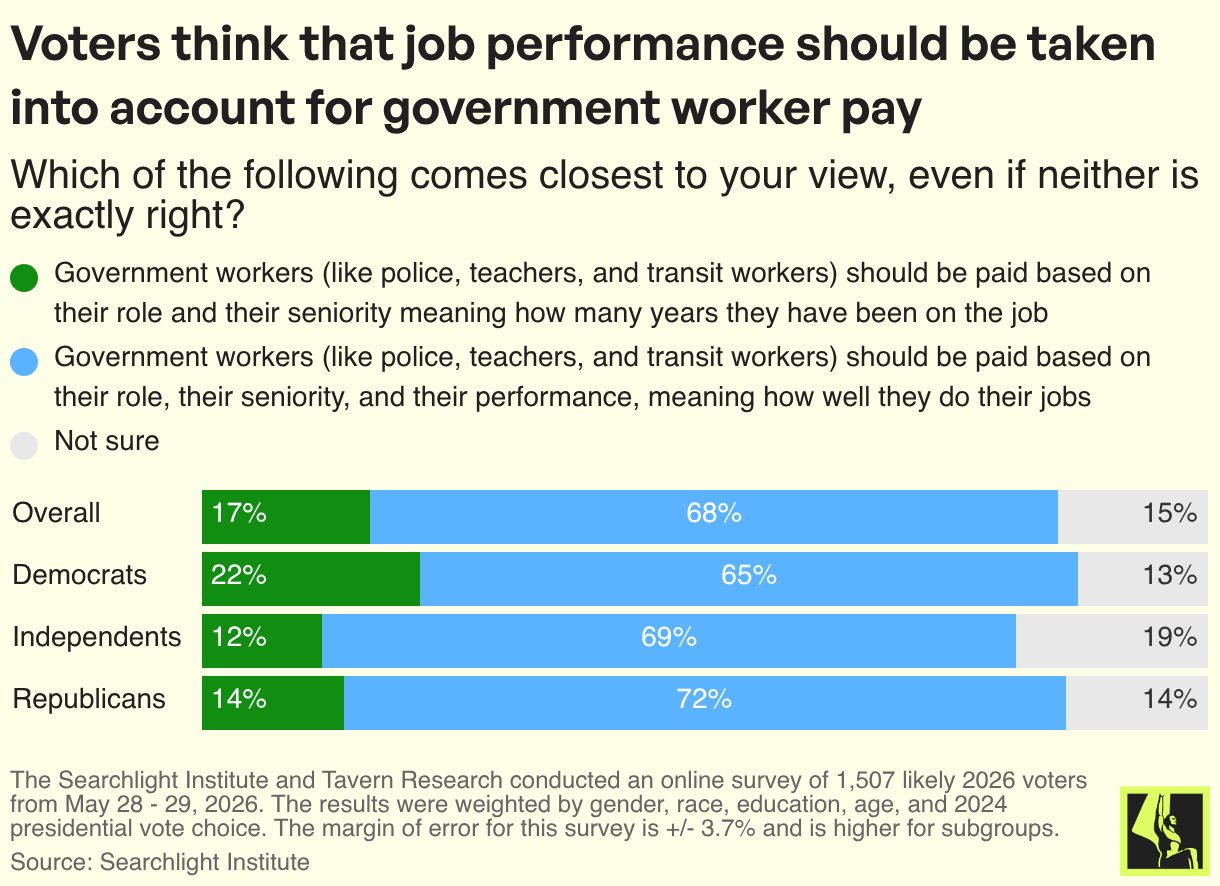
In a blind test, before voters were told about the current pay scale for government workers, nearly 7-in-10 (69%) said that pay should be based not just on role and seniority, but also on performance. Only 17% said that performance should not be taken into consideration in the pay scale. This pattern held across all demographic groups that we tested, including across party, educational, racial, and age differences.
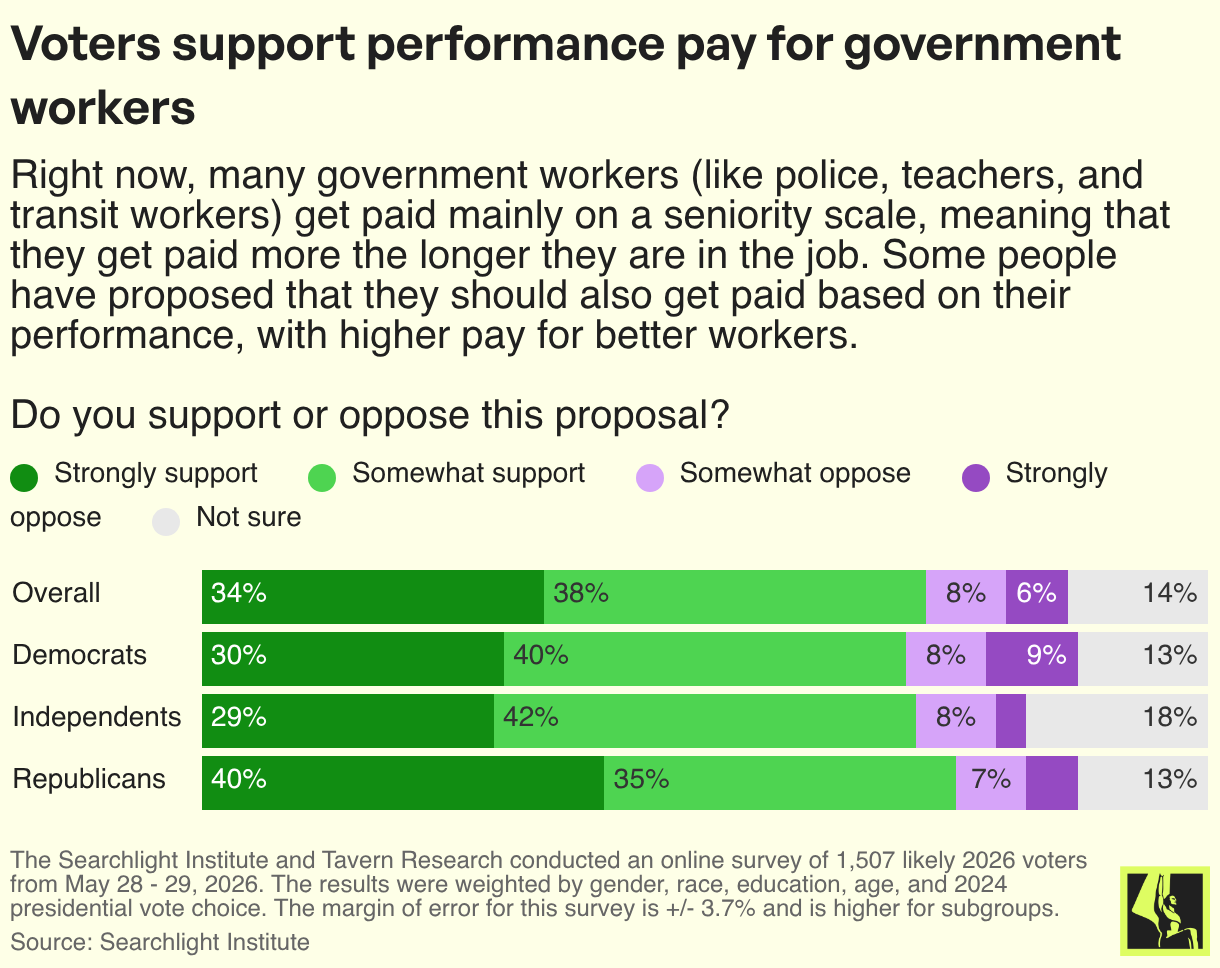
These opinions remain stable even after voters learned that most public sector workers are currently paid on a seniority basis. Asked if they would support or oppose changing the scales so that better workers earn more, 72% said yes, again with net positive support for performance- based pay for public sector workers across all demographics.
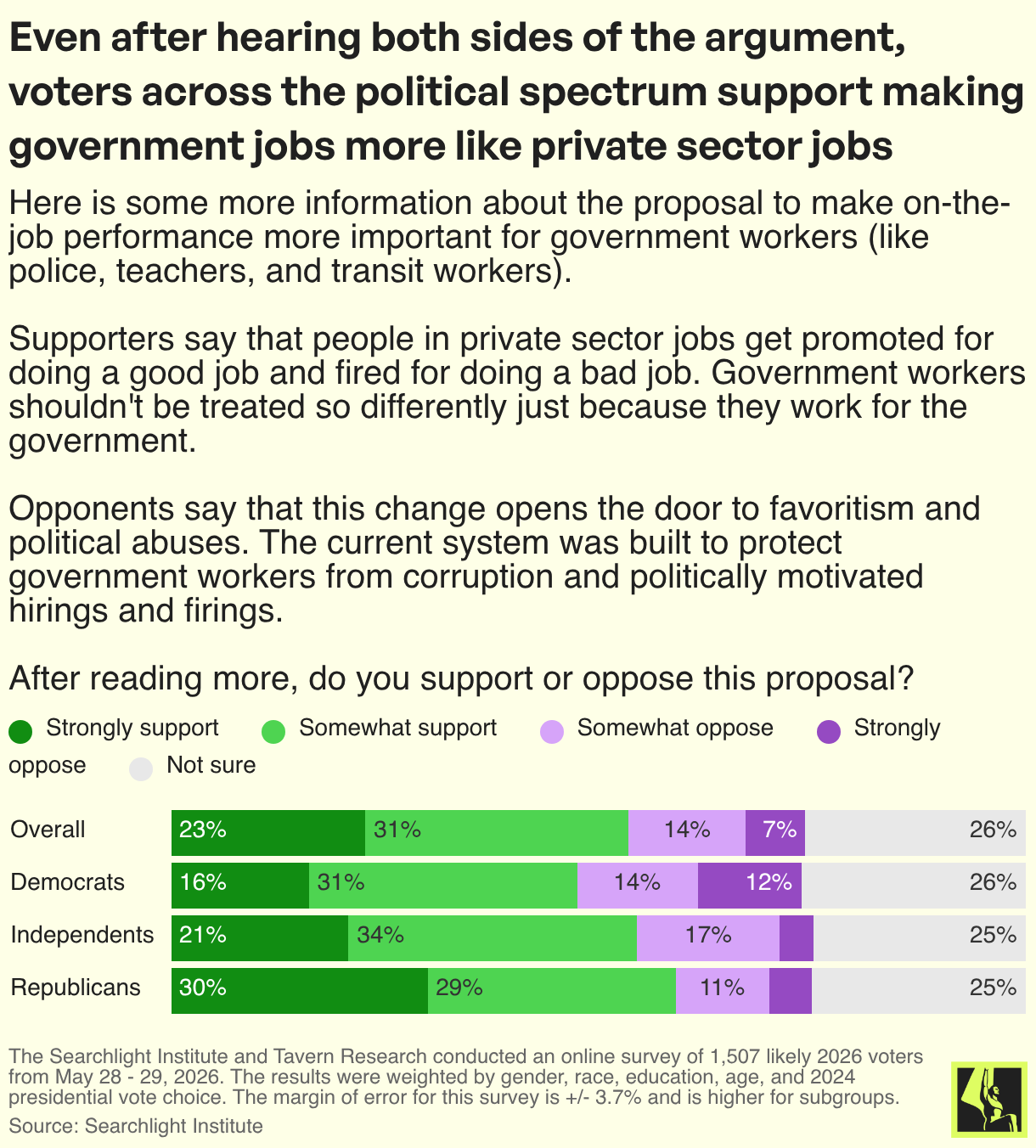
Respondents then saw messages both supporting and opposing this change to government worker pay. This informed ask dampened support for the proposal slightly, but it still held majority support (54%). Even in its weakest group, Black voters, support remained net positive at +16.
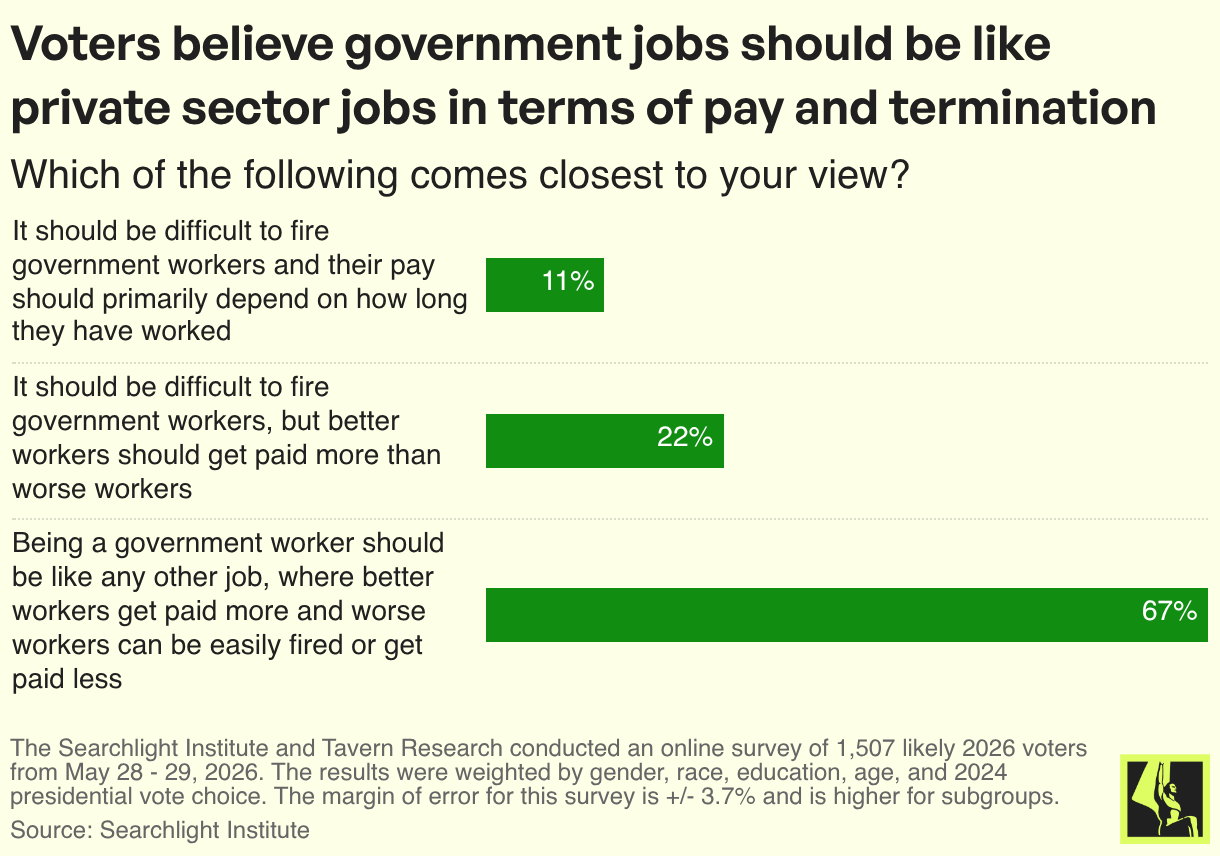
Voters’ underlying views are made plainly clear after voters were asked how they thought government jobs should work. Two-thirds (67%) said that they think that being a government worker should be like any other job, where better workers get paid more and worse workers can be easily fired or get paid less. Only a third (33%) of voters say that it should be hard to fire government workers.
Conclusion
Voters displayed consistent support for tying government worker pay to role, seniority, and performance – not just role and seniority alone. This preference proved to be durable, surviving exposure to both the fact that this isn’t the current status quo and to messages against the proposal. Voters don’t want government jobs to operate by a different set of rules than everyone else’s.
Methodology
The Searchlight Institute and Tavern Research conducted an online survey of 1,507 likely 2026 voters from May 28-29, 2026. The results were weighted by gender, race, education, age, and 2024 presidential vote choice. The margin of error for this survey is +/- 3.7% and is higher for subgroups.