
Our 2025 Fellowship Polling Review
Over the past few months, Searchlight’s fellows have been conducting research on some of today’s most pressing policy issues, from the ever-growing housing crisis to the state of AI in America. To supplement this work, we surveyed 2,423 American adults to get a baseline understanding of where voters stand on the issues our fellows have been thinking about. These findings reflect a nation defined by intense internal dynamics and nuanced approaches to a litany of policy issues.
National Vibes and Values
Senior Fellow Marc Dunkelman wanted to better understand Americans’ sense of patriotism and the perception of the country’s role on the global stage.
When respondents are asked if they are proud to be American, 77% say yes. However, there is a significant divide in the racial and political makeup of those who feel that pride. Republicans (71%) and white Americans (52%) are significantly more likely to be very proud to be American than other partisan and racial subgroups.
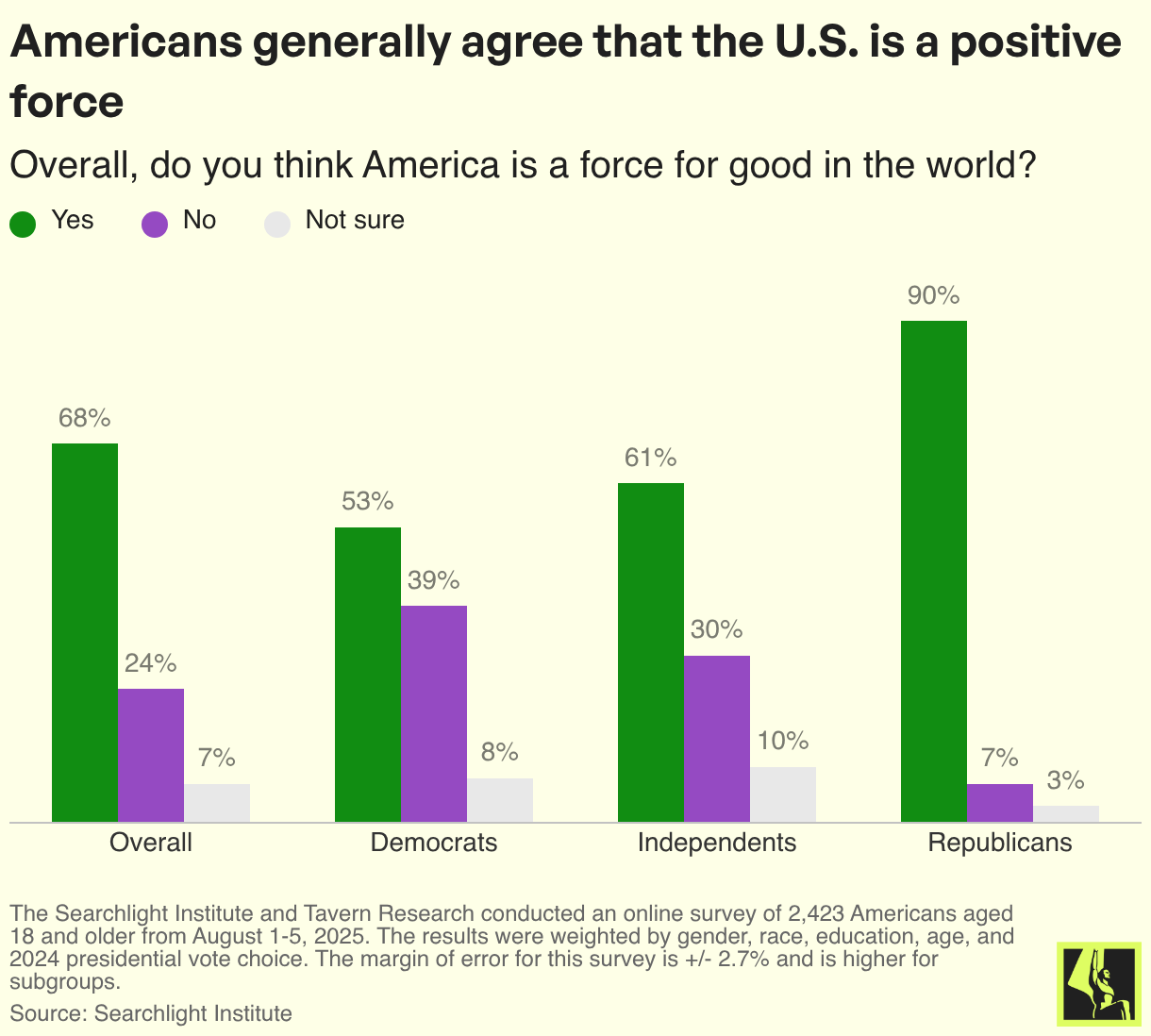
There is also a perception gap for the parties and the nation as a whole. When asked if they believe that America is a force for good in the world, a majority of respondents (68%) say yes. However, there’s a partisan split on this answer as well, with 90% of Republicans but just 53% of Democrats saying America is a force for good in the world.
When polled on their perceptions of each political party’s answer to this same question, some 68% of respondents say that Republicans view the country as a force for good — 22 points off what Republicans actually think. On the other hand, roughly 48% say the same of Democrats, slightly underestimating their actual perceptions, but not by much.
Domestic Policy Priorities
Housing
Fellows Chad Maisel and Aaron Shroyer sought to assess Americans’ thoughts about housing costs and what benefits — if any — they think will come from building more housing in their communities, state, and the nation.
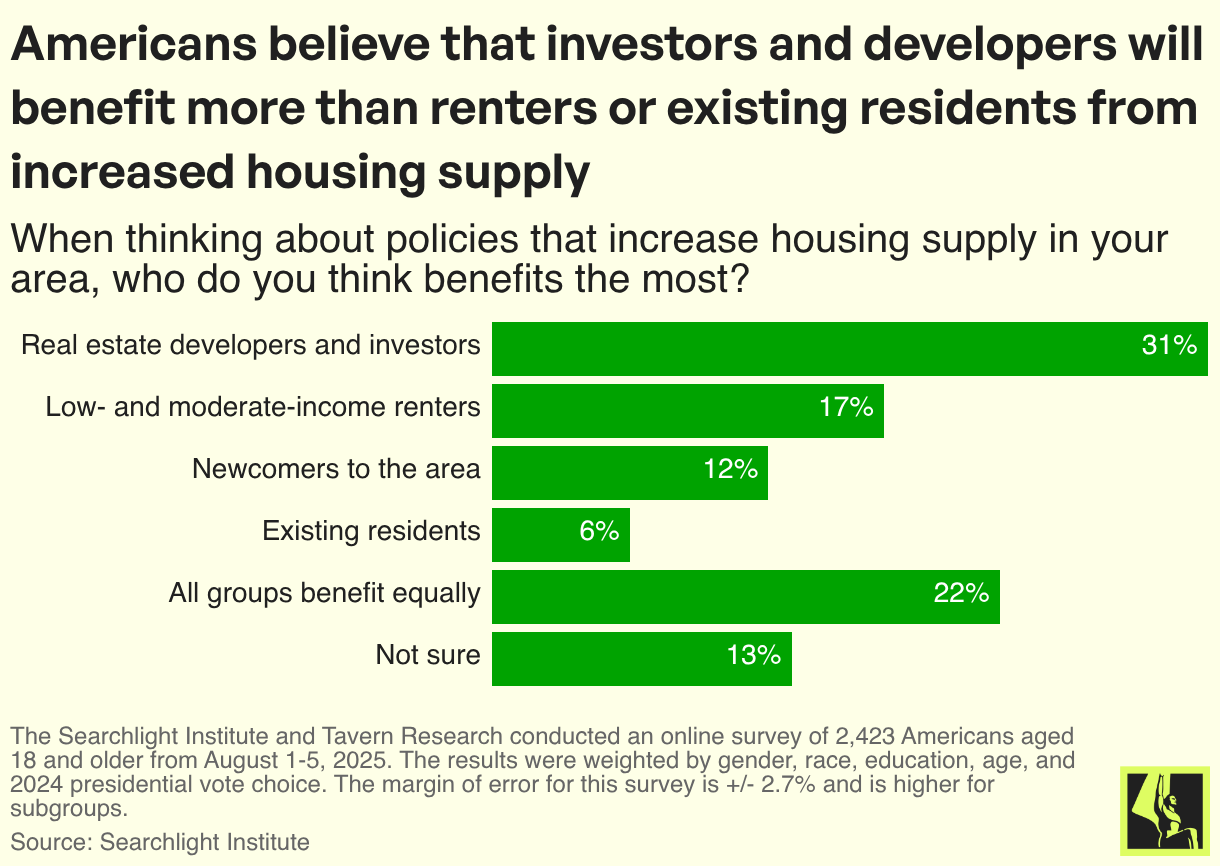
Americans generally support increasing housing supply (53% support vs. 31% oppose). The primary reasons for support are split between the potential use by people moving in from outside the community (26%) and the ability to provide affordable options for families already living there (25%). Despite their support for building more housing, Americans have sober views of the housing market. A plurality (31%) say that real estate developers and investors are the most likely to benefit from increased housing supply, eclipsing low- and moderate-income renters (17%), newcomers to the area (12%), and existing residents (6%). Contributing to the demand for relief, “wages not keeping up” and “landlords setting rents above market value” are seen as the biggest drivers of rising housing costs.
Most Americans believe increasing housing supply lowers costs at a state level (42% yes vs. 31% no). Meanwhile, in our previous polling, we found that nearly half (44%) of Americans said that building more housing in their communities would raise prices. This presents a notable distinction: Americans are more likely to say that housing costs will go down with more supply when they zoom out to the state level, but not when thinking about their communities.
Despite this, majorities of Americans across party lines support building more housing near where they live (57%). This support is consistent across partisanship, although Independents (51%) and Republicans (51%) are less likely to support local housing development than Democrats (69%). The core of this debate centers on perceived community impact: 95% of supporters believe it will help their community, while 90% of opponents believe it will hurt their community.
Public Safety
Senior Fellow Stef Feldman wanted to explore Americans’ perceptions of violent crime over different time horizons, and if they think there has been a spike, understand who they think is to blame.
A plurality of Americans (42%) perceive violent crime in the U.S. as having increased over the past year, while 32% say it’s stayed the same, and only 16% say it’s decreased. Views on crime in respondents’ local areas are more stable year-to-year, but still perceived as worse than a decade ago. A narrow plurality blames Donald Trump more than Joe Biden for national violent crime trends (42% blame Trump vs. 34% blame Biden).
Cost of Living
Director of the Searchlight Energy Security Project Luke Bassett and Fellow Eyang Garrison were interested in how Americans feel about rising costs and monthly bills.
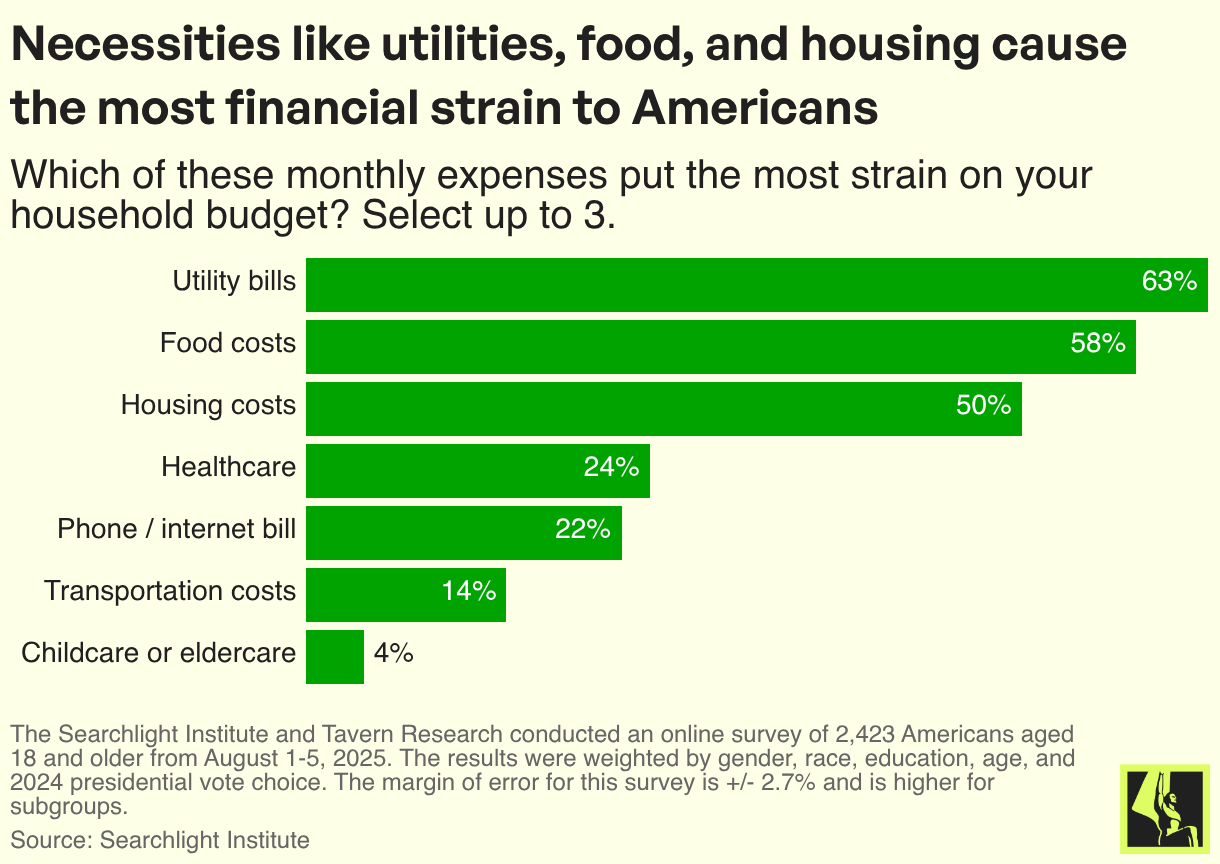
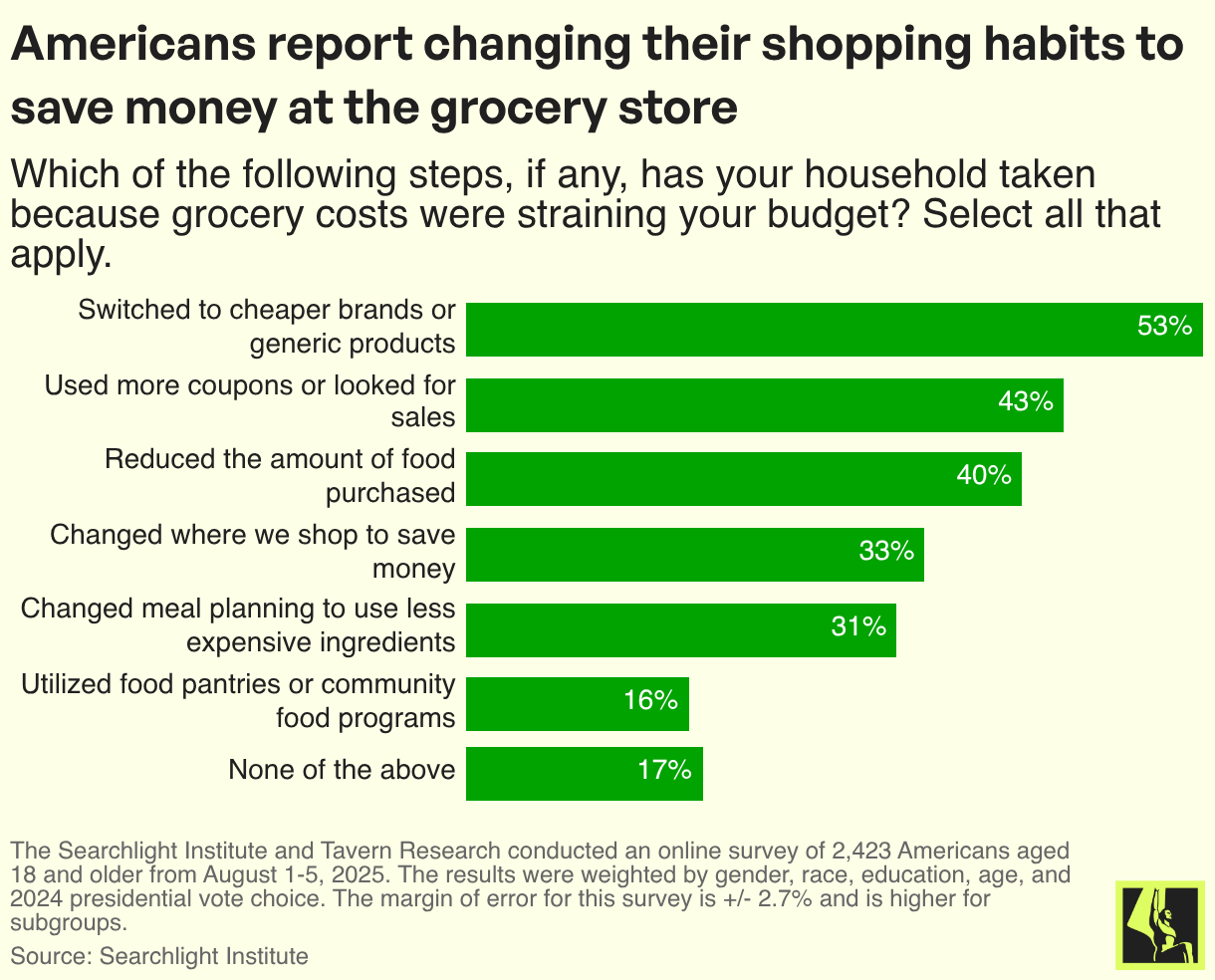
As affordability continues to animate our national politics, Americans are expressing their concerns about high prices. Nearly 4 in 5 Americans (78%) say groceries are more expensive than a year ago. This perception is stable across party lines, and majorities say rising costs have caused them stress. That’s especially true of Democrats (64%), but with similar levels among Republicans (59%) and Independents (58%). People also report changing their behavior to account for rising prices, such as switching to cheaper brands (53%), using more coupons or sales (43%), and reducing the amount of food purchased (40%). Utility bills are seen as the top strain on household budgets (63%), followed by food costs (58%) and housing (50%). Perhaps unsurprisingly, when asked about steps that policymakers could take to lower energy costs, 50% of respondents cite lowering residential electricity or heating bills.
Social Safety Net
Fellow Eyang Garrison wanted to identify Americans’ support for core social safety net programs and who they think should benefit from them.
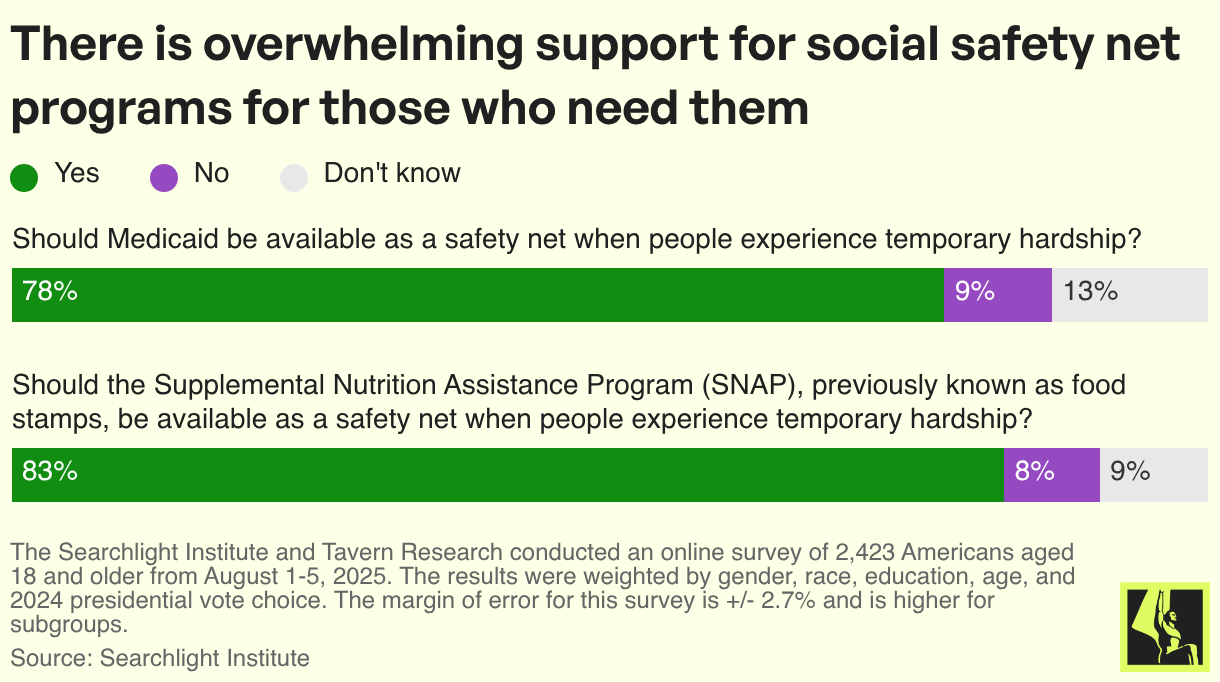
We find overwhelming support for safety net programs like Medicaid and SNAP. Over three-quarters of respondents (78%) say Medicaid should be available to people facing temporary financial hardship, and nearly two-thirds (63%) believe working people who earn too much to qualify but not enough to afford private health insurance should still be eligible for Medicaid coverage. Support for SNAP is even higher, with 83% reporting that it should be available as a safety net when people experience temporary financial hardship.
Health Care
Senior Fellows Rachael Bedard and Stef Feldman wanted to better understand Americans’ attitudes toward preventive medicine and the treatment of chronic diseases.
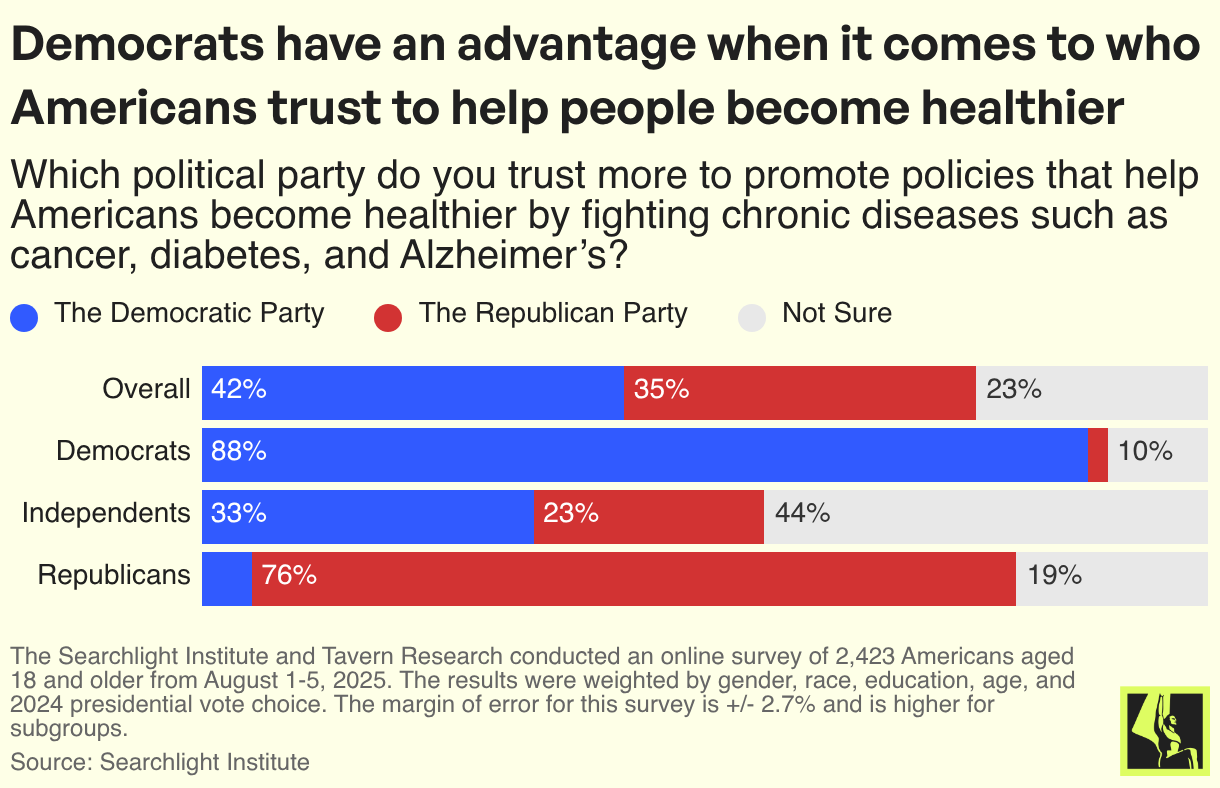
Nearly all Americans (90%) believe it is important for the government to help people become healthier by fighting chronic diseases like diabetes and Alzheimer’s. When asked which party they trust more on this issue, the public as a whole gives Democrats a 7-point advantage (42% Democrats vs. 35% Republicans), though most respondents answer that they trust their own political party on the issue (D+85 among Democrats vs. R+70 among Republicans). While they trust Democrats more by 10 points, a plurality of Independents (44%) say that they are not sure. A slim majority (51%) believes most illness could be prevented through better individual lifestyle choices, while 35% say illness is mostly driven by forces beyond personal control. And when it comes to making health decisions, Americans overwhelmingly say people should rely primarily on their own research (69%) rather than government guidance (16%), reflecting a strong preference for individual judgment in navigating the health system.
Conclusion
One of the key principles of the work that Searchlight fellows do is to proceed unencumbered by orthodoxy or fear of institutional influence. That can only happen with honest data that paints a picture of where the electorate is and where it wants to see the country go. As Searchlight looks to 2026, these same principles will guide the approach of our fellows and the policy team in service of producing actionable solutions for our nation’s most intractable issues.
Methodology
The Searchlight Institute and Tavern Research conducted an online survey of 2,423 Americans aged 18 and older from August 1-5, 2025. The results were weighted by gender, race, education, age, and 2024 presidential vote choice. The margin of error for this survey is +/- 2.7% and is higher for subgroups.